 Firefly Jar
Positive self-talk for kids: what to say instead, with 16 swaps for the moments it goes wrong
Positive self-talk for kids means having a kind, true sentence ready for the moment something goes wrong: "I don't know it yet" instead of "I'm stupid", "I can try again" instead of "I'm bad at this". Children learn that sentence mostly from the voice they hear most, which is yours. So the four things that help most are to talk to yourself kindly out loud, give them short lines for real moments, swap the harsh sentence for a true one when you hear it, and say the lines often enough that they are there when needed.
Where a child's self-talk comes from
Young children talk to themselves out loud all the time: while they build, while they draw, while they climb. Psychologists call it private speech, and it is normal. Over the school years most of it goes quiet and becomes the voice in their head.
What that voice says is borrowed. A child picks up phrases from the grown-ups around them, from teachers, from siblings and from books, and uses them on themselves. When you hear a four-year-old say "Oh, come on" to a jigsaw piece in your exact tone, you are hearing it happen.
That is why a parent has a real say in it, through what the child hears in ordinary moments, far more than through any talk about it.
Four things a parent can do
1. Talk to yourself kindly, out loud
When you drop the eggs, say what you want them to say. "Oops. I dropped it. I'll get a cloth." When the shelf you are putting together beats you: "This is hard. I'm going to take a break and try again after lunch." Children learn more from hearing how you treat your own mistakes than from what you tell them about theirs.
The opposite works too. A parent who says "I'm so stupid" about a parking ticket is teaching that sentence.
2. Give them a short line for a real moment
A line needs to be short enough to say under stress and true enough to believe. Attach it to a moment that keeps coming back: the zip that sticks, the tower that falls, the spelling test. Our list of affirmations for kids by age has 40 lines with a moment for each.
3. Swap the harsh sentence for a true one
When you hear "I'm stupid", do not argue ("No you're not") and do not ignore it. Say what you see, then offer a sentence that is true: "You're frustrated because this page is hard. You don't know it yet." The table below has sixteen swaps. If it has only just happened and you want help with that night, our guide to what to say when your child says "I'm stupid" is about the moment itself and the morning after.
4. Say the lines often, on the good days too
A line said only in a crisis feels like a fix. A line said every night at bedtime, or every morning in the car, is just part of the day, and it is there when the hard morning comes.
16 swaps for when it goes wrong
| When they say | Offer instead |
|---|---|
| I'm stupid. | I don't know it yet. |
| I can't do it. | I can't do it yet. I can try one more time. |
| I'm bad at this. | I'm learning this. |
| I always mess up. | I made a mistake. I can fix it. |
| Nobody likes me. | Today was hard with my friends. Tomorrow is new. |
| I'm the worst. | I'm having a bad moment. |
| It's too hard. | It's hard. I can do hard things, a bit at a time. |
| I give up. | I need a break. Then I'll try again. |
| I'm bad. | I did something unkind. I can say sorry. |
| I'm not good at drawing. | I'm still practising. |
| Everyone else can do it. | I'm learning at my speed. |
| I'll never get it. | Not yet. |
| I'm ugly. | My body is strong, and it's mine. |
| I'm scared. | I'm scared, and I can be brave a little bit. |
| It's not fair. | I'm angry. I can breathe, then say what I need. |
| I hate myself. | (Stop, sit with them, and listen. See below.) |
Two rules for using the table. First, name the feeling before you offer the line. A child who feels heard will take the new sentence; a child who feels corrected will push it away. Second, keep the swap true. "I'm the best reader in my class" is not a swap for "I'm stupid at reading". "I'm learning to read" is.
What not to do
- Do not argue with the feeling. "Don't be silly, you're brilliant" tells a child their feeling is wrong. Say what you see first.
- Do not overpraise. Praise the effort and the specific thing ("You kept going after it fell") rather than the child as a whole ("You're a genius").
- Do not turn it into a lesson every time. Sometimes a hug and "that was hard" is enough, and the line can wait for bedtime.
- Do not make them say it. A line forced out in tears does not feel true. Offer it, and say it yourself if they will not.
When to talk to someone
Most children say harsh things about themselves sometimes, especially when tired or frustrated. If the harsh talk goes on for weeks, if your child seems sad or anxious most days, or if they stop enjoying things they used to love, make an appointment with their doctor or ask the school counsellor. If a child ever says they want to hurt themselves or wish they were not alive, take it seriously at once and call their doctor or local emergency services. In the US and Canada you can also call or text 988. Self-talk lines are a family habit. They are not a treatment.
Why this one matters to me
I was an angry kid. When I was fourteen, the mother who drove our carpool looked at me in the mirror and said: Gal, I do not understand. You are such a nice kid, and still you are angry all the time. The sentence never left.
It took me years to see the world any other way.
My daughter Naomi is three now. The book I wrote for her, The Magic Words Inside of Me, gives her lines like these to say out loud, and Firefly Jar makes it for other children too. Every page ends with a line you start and your child finishes: "I might not know how to do it…" "…YET!" or "Mistakes are just proof…" "…that I'm trying and learning!" or "It is okay to be mad or sad…" "…but I won't give up!"
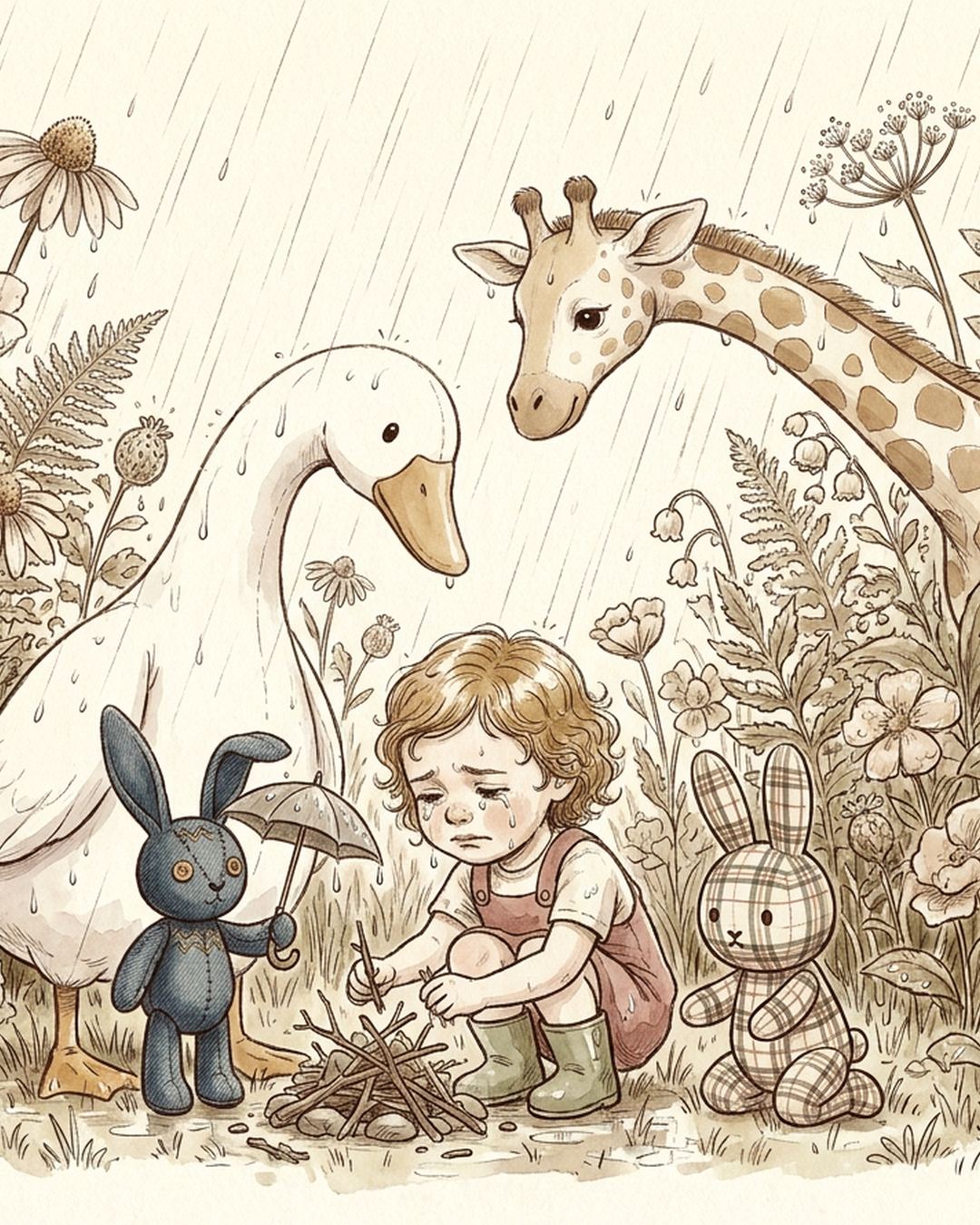
Firefly Jar paints your child into that rainy page from your photos, with their own toys keeping them company. The PDF is $49 and usually comes by email within a day, often within a few hours, ready for your own printer or any print shop. In the US and Canada we can print it for you too: a hardcover with the PDF, $79 to a US address and $95 to a Canadian one, there in 7 to 12 days. If you are wondering what a book like this can and cannot do, I wrote an honest answer to whether personalised books build confidence.
If you would like the first voice your child borrows to be a kind one, you can start their book here.
Frequently asked questions
How do I teach my child positive self-talk?
Talk to yourself kindly out loud when you make mistakes, give your child a short true line for moments that keep coming back, swap their harsh sentence for a true one after naming the feeling, and say the lines often, not only in a crisis.
What are examples of positive self-talk for kids?
Short, true lines for hard moments: "I don't know it yet", "I can try one more time", "I made a mistake, I can fix it", "I need a break, then I'll try again", "I'm scared, and I can be brave a little bit".
How do I model positive self-talk for my child?
Talk to yourself kindly, out loud, when something goes wrong in front of them: "Oops. I dropped it. I'll get a cloth." Children borrow the phrases they hear, so how you treat your own mistakes teaches them more than anything you say about theirs.
Is it normal for young children to talk to themselves out loud?
Yes. Psychologists call it private speech, and it is common in young children while they play and work things out. It usually goes quiet over the school years and becomes inner speech.
When should I worry about my child's negative self-talk?
If it lasts for weeks, if your child seems sad or anxious most days, or if they stop enjoying things, talk to their doctor or a counsellor. If they say they want to hurt themselves, contact their doctor or emergency services at once.
Gal, Naomi's dad
Make one for your child