 Firefly Jar
Do personalised books build a child's confidence? What I can honestly say, and what I can't
I have not found a study that shows a personalised book builds a child's confidence, and I will not promise it, even though I make one. What research there is points somewhere smaller: children pay close attention to books about themselves, and in one study they learned new words better from the personalised parts of a printed book. Two others found no difference, and a newer one found children shared more after a story with their own photo and name in it. What you can see at home is real too: a child who finds their own face and toys on the page, asks for the book again and starts saying the lines. Here is what is known, what is not, and what to look for if you choose one.
Why I am writing this one carefully
I make a personalised book. Firefly Jar paints The Magic Words Inside of Me, a book I first made for my daughter Naomi, for other children from their parents' photos. So I have a reason to tell you these books do wonderful things. That is the reason to be careful.
"Builds confidence" is one of the most common promises in this market. It is easy to write and impossible to check. A child's confidence comes from many places: the grown-ups around them, how they are spoken to, friends, school, temperament, the things they get to try and fail at. A book is one small thing in that list.
What the research found
One researcher who has studied personalised children's books for years is Natalia Kucirkova. Her work, and two studies by other teams, give a parent five useful facts.
One small experiment on words. Kucirkova, Messer and Sheehy read a picture book to 18 children, average age three years and ten months. Part of the book was personalised and part was not, and each part had new words in it. The book was read to them twice, a week apart, and they learned more of the new words from the personalised parts (Kucirkova, Messer and Sheehy, First Language, 2014). That is a real finding. It is also 18 children, one book and words. It says nothing about confidence.
The same idea on a screen found nothing. When Kucirkova and colleagues tried it with a digital book read by 26 mothers and their three- and four-year-olds, with personalised and ordinary pages in the same book, they found no difference in word learning between the two kinds of page (Kucirkova and others, International Journal of Educational Research, 2021). Our book is a PDF, and you can read it on a tablet as well as on paper, so I would rather you heard this from me.
A story's lesson did not land better. Ellen Kruse and colleagues read preschoolers a story about sharing, either with only the child's name in it or without it. The children with their name in the story did not understand its moral any better, and did not share any more afterwards (Kruse, Faller and Read, Early Childhood Education Journal, 2021). That study only changed the name, so it does not settle the question for books that show the child. It does not support the claim either.
A newer study found more sharing. In 2025, Hüseyin Kotaman and Aslı Balcı gave 315 children aged five and six a sharing task with stickers: each child could give some of their favourite stickers to a child they did not know, once before a story and once after it. In between, each child heard a story about sharing with their own photo and name in it, the same story without them, or a story not about sharing. The children in their own story increased their sharing more than the other groups. The sharing story without them helped too, just less (Kotaman and Balcı, Early Childhood Education Journal, 2025). That is stickers, straight after one reading, in one study. It is not confidence.
An honest note about limits. Writing in Scientific American in September 2021, Kucirkova noted that personalised book publishers claim their books build empathy and self-esteem, and that her own studies found children highly engaged by personalised books. She also pointed out that these books work through familiarity and a child's interest in themselves, while decades of research on ordinary stories show children learn from stories that take them into other people's heads. She wrote that the studies are still too few to know for sure (Scientific American, September 2021). In plain words: a book about your child is good at holding their attention. A book about someone else is good at other things. A child needs both.
I did not find a study showing that a personalised book raises a child's confidence or self-esteem.
What you can see when a child is in the story
You do not need a study for this part. Watch your child with a book that has them in it and you will see some of these:
- They look for themselves. On every page, before anything else.
- They name things. Their toys, by the names they gave them. Their own name when you read it.
- They ask for it again. Children ask for the same book over and over anyway; a book with them in it is often the one they choose.
- They correct you. Change a word and they will tell you.
- They take a part. If the book gives them a line to say, they start to say it.
That is attention. It is where the useful part can start.
What I think is the useful part
If a book gives a child words to say, and they say them often enough, they learn them by heart. What they do with them is theirs. I can only tell you what I see at home.
It is why the book I made for Naomi is built on lines she says. She knows all twenty-seven by heart now, and I watch her reach for one when she needs it.
Those words work without the book too. You can say them in the car. Our list of affirmations for kids by age has lines to start with, with or without any book.
What to look for in a personalised book
- Is it your child, or a name? Some books print a name and choose a cartoon face from a menu. Others draw your child from photos. Both can be lovely. Know which you are buying.
- Are their own things in it? Their toys, their people. A child knows their own bunny.
- Is there anything to say? A line they finish, a refrain, a question they answer. Something they take away from the page.
- Would you read it fifty times? You will.
- What happens to the photos? Read the maker's privacy page before you upload. Our guide to whether it is safe to upload your child's photo has four questions to ask.
Our comparison of personalised children's books goes through the main makers side by side.
And keep reading books about other children, other animals and other places. A book about your child is one book on the shelf.
What ours is, so you can judge it
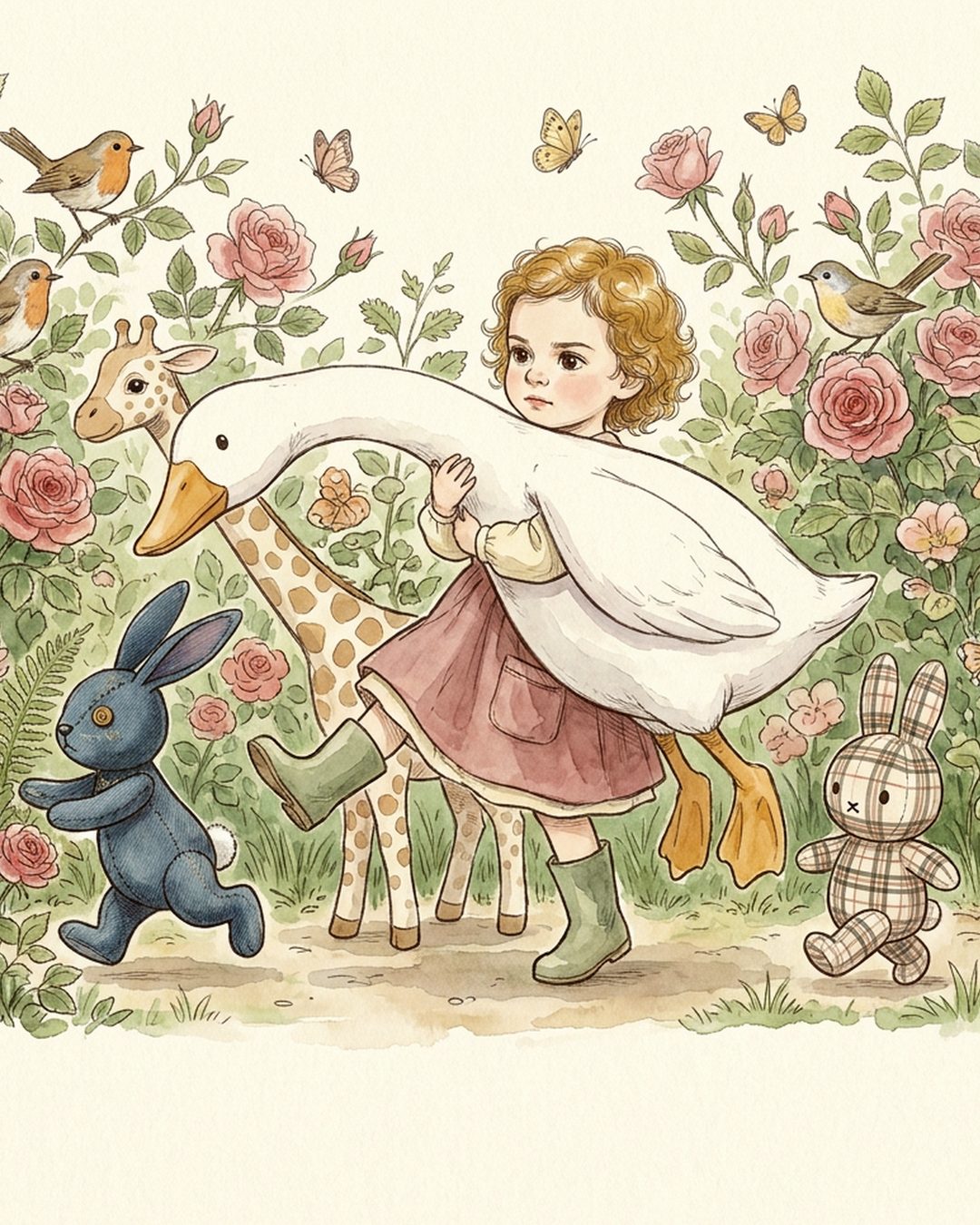
Firefly Jar's book is painted from your photos of your child and two to four of their own toys, so the face on every page is theirs. On each page you read a short rhyme, then start a line, "I am brave enough to ask for help…", and your child finishes it, "…when I need it!" There are 27 of those lines in 32 pages. You pay $49 for a PDF, which usually reaches your inbox within a day, often in a few hours, and you can print it anywhere. We look at every page of every book before it goes out.
Knowing all of this, if you still want one, it is here.
Frequently asked questions
Do personalised books build a child's confidence?
I have not found a study that shows they do. Research has found that children are very engaged by books about themselves, and one small study found they learned new words better from personalised pages in a printed book. A study on screen and a study of a story's moral found no difference, and a 2025 study found that children increased their sharing more after a sharing story with their own photo and name in it. A child's confidence comes from many places, and a book is one small one.
What does the research say about personalised children's books?
A 2014 experiment with 18 children around age four found they learned new words better from the personalised parts of a printed book. A later study with a digital book found no difference in word learning, and a 2021 study found that putting a child's name in a story about sharing did not help them understand its moral. A 2025 study with 315 children aged five and six found that a sharing story with the child's photo and name in it increased their sharing more than the same story without them, though that story helped too. A leading researcher in the field says the studies are still too few to know for sure.
Why do children like books with themselves in them?
Children are very interested in themselves and in what is familiar. They look for their own face, name their own toys, ask for the book again and correct you if you change a word.
Should a child only read books about themselves?
No. Stories about other people, animals and places take a child into someone else's head, which a book about themselves cannot do. A personalised book is best as one book on a full shelf.
What should I look for in a personalised book?
Whether it shows your actual child or only their name, whether their own toys or people are in it, whether it gives them something to say, and what the maker does with the photos you upload.
Gal, Naomi's dad
Make one for your child