 Firefly Jar
What to say when your child says "I'm stupid": in the moment, the next morning, and when to get help
When your child says "I'm stupid", start with what you see, not with telling them they are wrong: "That was so frustrating. You really wanted it to work." Get down to their level, keep your voice low and leave the lesson for later. In a young child the words are usually a feeling, not a belief: this is too hard, and I feel awful. The real talk comes the next morning, when everyone is calm. If it goes on for weeks, spreads to everything, or comes with sadness most days, talk to your child's doctor. Below is what the words often mean at each age, what helps in the moment, and what to do after.
Before you answer
Hearing your child call themselves stupid lands hard. Some parents feel a jolt of fear. Some hear their own childhood in it. Take one breath first, because the answer that jumps out is usually "You're not stupid", and it rarely helps on its own. It argues with the feeling, and the feeling is what the child is telling you about.
What it usually means, by age
These bands are a rough guide from how children talk at each age, not a test. A tired or upset child can sound younger than they are.
Ages 2 to 4: a big word for a big feeling. A small child who says "I'm stupid" has picked the word up somewhere: an older sibling, a cartoon, a friend, sometimes a grown-up talking about themselves. They use it because it is strong and it gets a reaction. It usually means "this is too hard" or "I'm angry". Researchers who study how children see themselves describe children up to about six or seven as tending to overestimate what they can do (Thomaes, Brummelman and Sedikides, Child Development, 2017). At this age, the word is more often borrowed than believed.
Ages 5 to 7: a hard task, and a room full of other children. School brings reading, numbers and classmates who seem to find it easy. Now "I'm stupid" usually comes attached to something: the spelling list, the shoelace, the drawing that does not look like the one in their head. It often means "I can't do this yet, and I feel ashamed". If it is nearly always about the same thing, such as reading, ask the teacher how that part of school is going.
Age 8 and up: it can start to be a belief. By eight or so, the same paper explains, children have learned to compare themselves with other children and to take in what others think of them. Most children still see themselves kindly: when the Dutch children aged 8 to 12 in that research described themselves in their own words, positive descriptions outnumbered negative ones about eleven to one. But this is the age when "I'm stupid" can become something a child thinks quietly, not only something they shout at a worksheet. Listen more than you talk.
What to say in the moment
Keep it short. An upset child hears your tone long before your words.
- Get close and get low. Sit or crouch beside them. Put the pencil or the puzzle piece down.
- Say what you see. "You worked so hard on that tower and it fell. That is really annoying."
- Name the feeling. "It feels awful when it won't go right." A feeling with a name is easier to hold, and it tells them the feeling is the problem, not them.
- Offer one true sentence, then stop. "This part is hard for you right now." Leave it there.
- Offer a break or a hand. "Do you want to stop for a bit, or shall I hold this end?"
| If they say | You might answer |
|---|---|
| "I'm stupid." | "That was really hard. I'm right here." |
| "I'm so dumb, I can't read." | "Reading is hard work at the moment. You're in the middle of learning it." |
| "Everyone else can do it." | "Some of them learned it earlier. You're learning it now." |
| "I'm the stupidest one in my class." | "Something happened at school today. Tell me about it." |
| "I'm stupid and I hate myself." | Stop what you are doing, sit with them and say: "Tell me more. I want to understand." See the last section. |
What not to say
- "You're not stupid, you're so smart." It comes from love, but it skips past what they feel. Blaise Aguirre, a psychiatrist who treats older children and teenagers whose self-dislike has set in, makes the same point to the Child Mind Institute: when you tell a child who runs themselves down that it is not true, they often feel you are lying to them (Child Mind Institute).
- "Don't say that." It stops the word, not the feeling, and it teaches a child to keep the feeling from you.
- Very big praise to balance it out. In one experiment, children aged 8 to 12 with low self-esteem who heard that their drawing was "incredibly beautiful", rather than just "beautiful", then chose easier tasks (Brummelman and others, Psychological Science, 2014). Plain, specific words are safer: "You tried three different ways to fix that."
- A talk about trying harder. Not now. Nobody takes in a lesson while they are crying.
The next morning
The useful conversation is the calm one, a few hours later or the next day. Side by side works better than face to face: at breakfast, in the car, walking to school.
- Bring it up lightly. "Last night, when the spelling went wrong, you said you were stupid. That sounded like a horrible feeling."
- Ask, then wait. "What made it feel like that?" Children often tell you something you did not know: a word a classmate used, a test, a comment from an older cousin.
- Pull the child and the task apart. "Spelling is hard for you right now. That is a different thing from being stupid. Everybody has something that is hard."
- Tell them one of yours. Something you found hard at their age, and what helped. Children like to hear that grown-ups were stuck too.
- Plan for the next time. Agree on something to do when the feeling comes back: a break, three slow breaths, a sign that means "help me". If you want a short line for it, the hard-moments table in our affirmations for kids by age has eight.
- Listen to your own words. "I'm such an idiot" about the lost keys is a sentence children borrow. Our guide to positive self-talk for kids is about that longer habit: the voice a child learns to use on themselves, and what to offer instead when the harsh one comes out.
For the ordinary evenings
I was an angry kid. Today I have a three-year-old daughter. I wrote her a book so she grows up with the voice I did not have.
It is called The Magic Words Inside of Me, and it is for the calm nights, not the bad ones. A book will not stop a child from ever saying "I'm stupid". What it does is give them other sentences about themselves to say out loud on an ordinary evening, so those are there too. On every page your child gets the last word, like "I have a beautiful mind…" "…and a great heart!" or "When things don't go my way…" "…I take a deep breath and try again!"
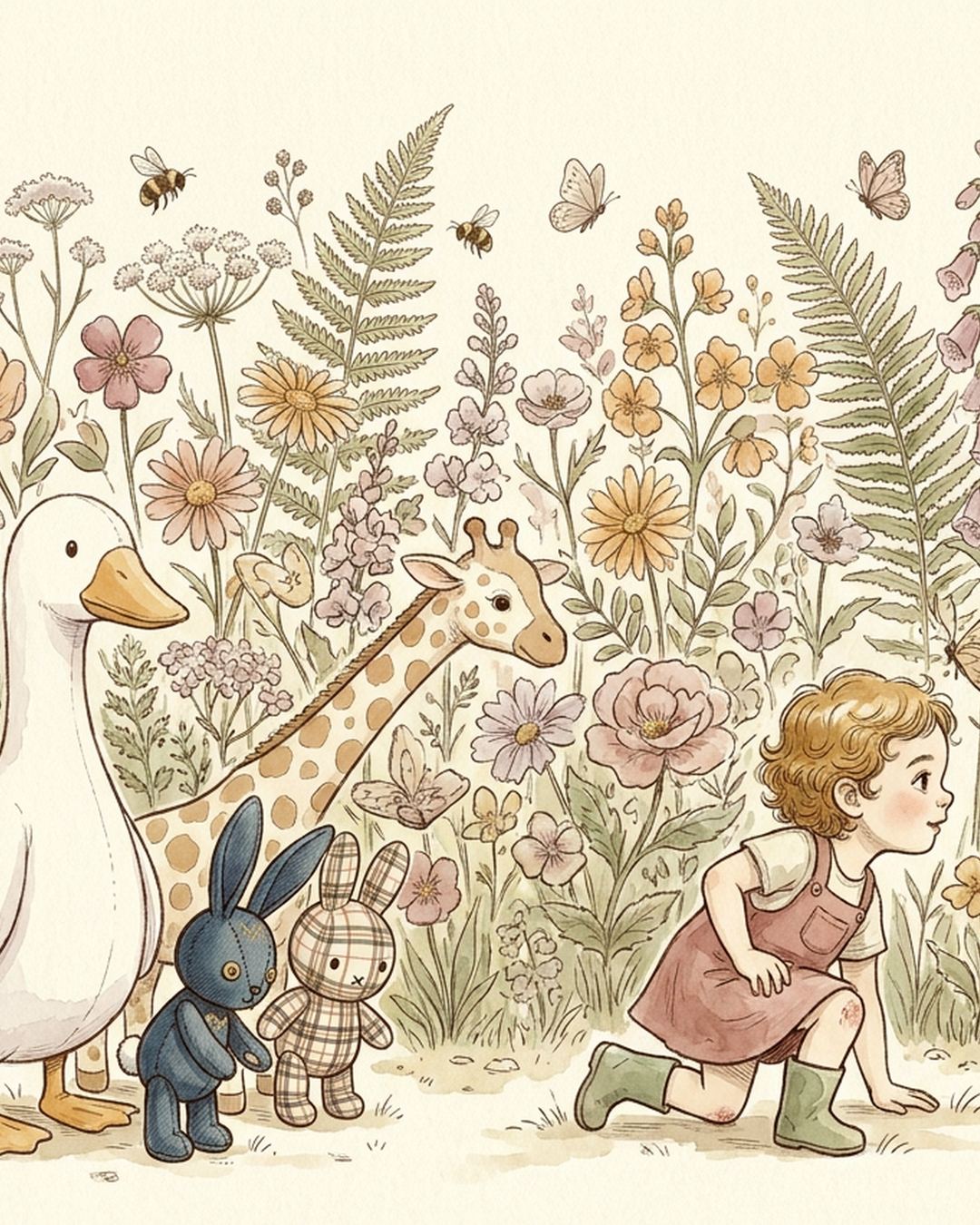
Firefly Jar paints a copy with your child in it, from your photos of them and two to four of their own toys. It is a PDF for $49, sent by email, usually within a day and often in a few hours, and you can print it anywhere. If you would like it for the ordinary evenings, the order page has the details.
When to talk to a professional
Almost every child is hard on themselves now and then, especially when tired, hungry or stuck. See your child's doctor, or for an older child the school counsellor, if:
- it goes on for weeks, or happens most days;
- it spreads from one thing ("I'm stupid at spelling") to everything ("I'm stupid at everything", "I'm bad");
- your child also seems sad, worried or irritable most of the time, sleeps or eats very differently, or seems to have lost interest in what used to make them happy;
- it is almost always about schoolwork. Then ask the school whether something, such as reading, is harder for them than it should be.
The CDC's advice is close to this: being sad now and then is part of every child's life, but sadness that persists, or losing interest in things a child used to enjoy, is a reason to talk to a health care provider (CDC, Anxiety and Depression in Children).
If your child talks about hurting themselves, or says they wish they had never been born, act on it that same day, however young they are. Stay with them and call their doctor. If you think they are in danger, call your local emergency number. In the United States and Canada you can also call or text 988.
Frequently asked questions
What should I say when my child says "I'm stupid"?
Start with what you see and name the feeling: "That was so frustrating. You really wanted it to work." Stay close, keep it short and offer a break or a hand. Save the talk for the next morning, when you are both calm.
Why does my child keep saying they are stupid?
In a young child it usually means "this is too hard" or "I'm angry", in a word they have heard somewhere. In a school-age child it often comes with a task that feels hard. If it is always about the same thing, such as reading, ask the teacher how it is going.
Is it normal for a young child to call themselves stupid?
Yes, now and then, especially when tired or stuck. Many children under about six or seven see themselves very positively, so at that age the word is usually a strong feeling, not a settled belief.
Should I tell my child they are smart?
Not as your first answer. Telling them they are smart argues with how they feel. Name the feeling first, and later praise something specific they did, like trying another way, rather than calling them brilliant.
When should I worry about a child who says "I'm stupid"?
Talk to their doctor if it keeps happening for weeks, spreads to everything, or comes with sadness, worry, poor sleep or losing interest in things they enjoyed. If a child talks about hurting themselves, call their doctor that day, or your local emergency number if they are in danger. In the US and Canada you can also call or text 988.
Gal, Naomi's dad
Make one for your child